
Introduction
Transportation has come a long way, evolving from horse-drawn carriages to self-driving cars. Each advancement in mobility technology has had a profound impact on our lives, shaping how we live, work, and interact with the world around us.
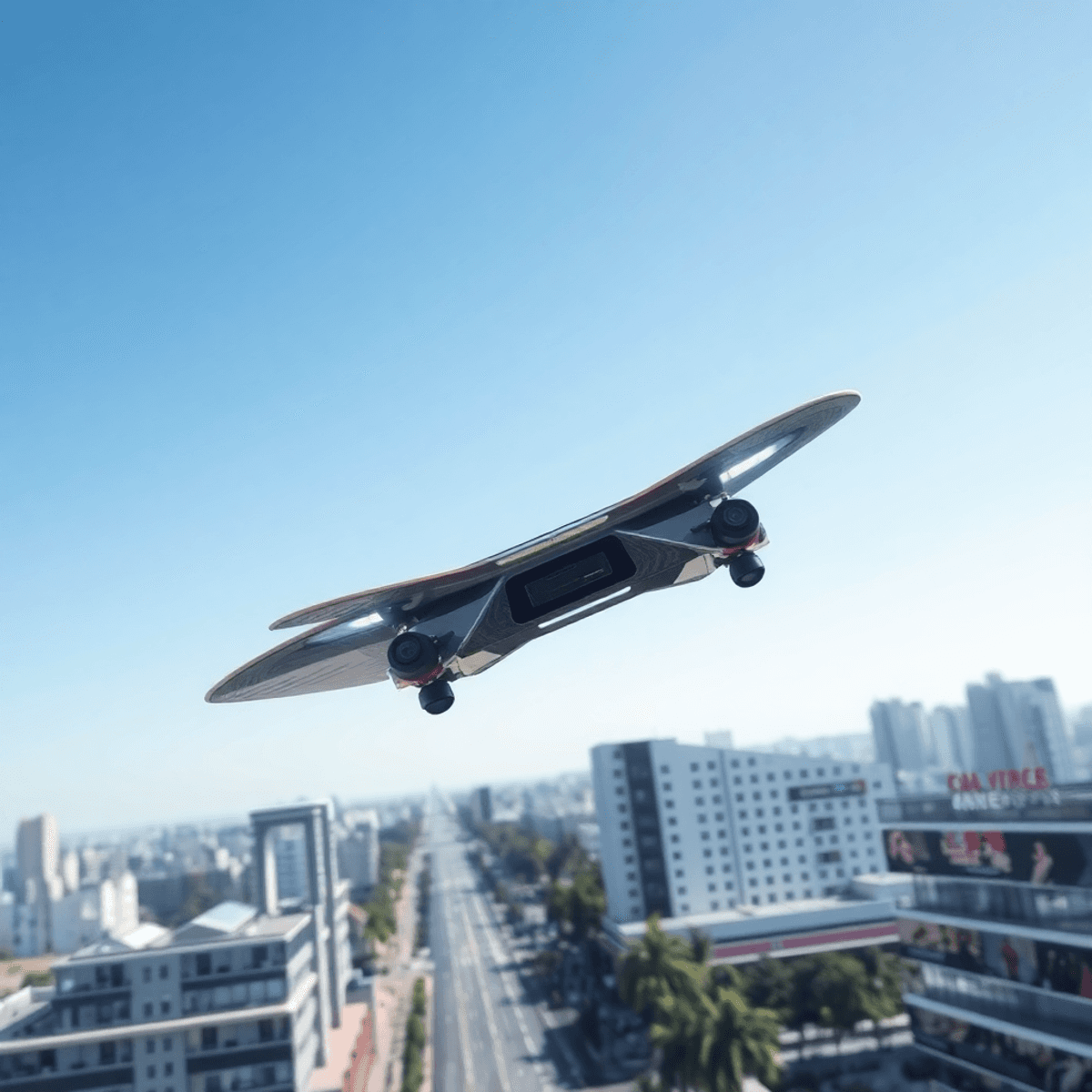
Now, in the 21st century, we find ourselves on the verge of another groundbreaking development: flying skateboards. This concept may sound like something out of a sci-fi movie, but it's an emerging idea that has the potential to revolutionize personal transportation.
Imagine being able to effortlessly glide through the air, bypassing traffic and leaving behind the limitations of traditional roads. Flying skateboards offer a unique combination of:
- Freedom and independence
- Cutting-edge technology
- Eco-friendly transportation options
Building upon existing advancements in hover technology, magnetic levitation, and advanced propulsion systems, flying skateboards hold the promise of providing an unparalleled mobility experience.
In this article, we will explore how these innovative vehicles could transform urban commuting, leisure activities, and last-mile transportation solutions – marking another significant step forward in our quest for future mobility.
Understanding Flying Skateboards
Flying skateboards are an exciting combination of regular skateboarding and cutting-edge technology. These groundbreaking devices look like traditional skateboards but have advanced systems that allow them to fly about a foot off the ground.
Design Elements and Core Components:
- Magnetic field generators for levitation
- Propulsion units for directional control
- Stabilization systems for balance
- Smart sensors for height and obstacle detection
- Lightweight composite materials for optimal performance
The science behind flying skateboards involves two main concepts: electromagnetic propulsion and quantum levitation. This technology uses special materials called superconductors, which need to be cooled to very low temperatures. When this happens, they create a magnetic field that lifts the skateboard off the ground. This magnetic force allows the board to hover steadily above any surface made of metal or another conductor.
Technical Specifications:
- Hover height: 12-18 inches
- Maximum speed: 25-30 mph
- Weight capacity: 200-250 lbs
- Battery duration: 45-60 minutes
- Charging time: 2-3 hours
Key Differences from Traditional Skateboards:
Flying skateboards have several advantages over regular ones:
- No physical contact with the ground
- Higher speed potential
- Less effort required from the rider
- Ability to go on various terrains
- Improved safety features
How Flying Skateboards Work
Unlike traditional skateboards that rely on pushing and wheels for movement, flying skateboards use automated systems to propel themselves forward. Riders can control how fast they go and which direction they turn by shifting their body weight, similar to how snowboarders maneuver.
The absence of wheels means there's no friction holding back the board's movements, resulting in smoother turns and greater agility.
Maintaining Balance in Mid-Air
To ensure riders stay balanced while flying, these boards come equipped with stabilization systems powered by artificial intelligence (AI). These systems constantly monitor the board's position and make adjustments as needed based on external factors like wind conditions or rider movements.
Avoiding Obstacles
Safety is paramount when it comes to any mode of transportation, including flying skateboards. That's why these devices are designed with built-in sensors that can detect nearby objects or barriers in their path.
When an obstacle is detected, the skateboard automatically adjusts its height or trajectory to avoid collision—making it safer for both riders and pedestrians alike.
The Future of Urban Mobility
Flying skateboards represent just one piece of the puzzle in reimagining how we get around cities. They share similarities with other futuristic transport ideas such as flying cars or personal aerial vehicles (PAVs).
What sets flying skateboards apart is their compact size and ability to navigate tight spaces—something traditional forms of transport struggle with due to limited room availability.
This makes them particularly suited for urban areas where traffic congestion is common and parking spots are scarce.
As technology continues to evolve, we may see more innovative solutions like flying skateboards emerge as viable alternatives for short-distance travel within cities—offering convenience without compromising on sustainability goals. Such advancements could potentially align with findings from recent studies on urban mobility, such as those outlined in this [UCLA report](https://
Key Innovations in Future Flying Skateboards
Solar Power Integration
Solar power integration stands at the forefront of flying skateboard innovation. The latest designs incorporate ultra-thin photovoltaic cells seamlessly embedded within the board's surface. These cells capture solar energy throughout the day, converting it into usable power for the board's propulsion system. The technology allows riders to charge their boards during use, extending flight time significantly.
Dual-Purpose Motorization
The motorization aspect brings a dual-purpose approach to flying skateboards. A hybrid system combines:
- Performance Motors - Delivering high-thrust capabilities for skilled riders
- Cruise Control - Enabling stable, controlled flight for daily commuting
- Smart Power Management - Automatically adjusting power output based on usage
This balance creates versatility, making flying skateboards suitable for both thrill-seekers and practical commuters. The advanced motor systems allow riders to switch between sport and transport modes with a simple command.
Urban Mobility Reshaping
The efficiency gains from flying skateboard technology reshape urban mobility patterns. These innovations create:
- 60% reduction in travel time compared to ground transportation
- Zero-emission travel when solar-powered
- Minimal infrastructure requirements
- Decreased traffic congestion through vertical mobility
The integration of AI-powered navigation systems optimizes route planning, considering factors like weather conditions, air traffic, and energy consumption. This smart routing capability maximizes the board's efficiency while ensuring rider safety.
Broader Trends Shaping Transportation Technology
Smart Technology and Its Impact on Transportation
Smart technology is changing the way we move around cities. With connected vehicles that can communicate with each other and with infrastructure in real-time, we now have a synchronized transportation network that can reduce accidents and traffic congestion. Here are some of the key benefits of these intelligent systems:
- Traffic Signal Optimization: Smart intersections adjust timing based on real-time traffic flow
- Predictive Maintenance: Sensors detect potential issues before they cause disruptions
- Dynamic Routing: AI-powered navigation systems suggest alternate routes during peak hours
The integration of 5G networks further enhances these capabilities, enabling vehicles to process large amounts of data instantly. Cities all over the world are implementing smart parking solutions, automated toll collection, and real-time public transit tracking.
The Role of Electrification in Transportation
Electrification is another important aspect of modern transportation evolution. The rise in popularity of electric bikes and scooters shows that there is a growing demand for clean and efficient urban mobility solutions. These micro-mobility options offer several advantages:
- Zero direct emissions
- Reduced noise pollution
- Lower operating costs
- Enhanced accessibility for short-distance travel
Major automotive manufacturers are investing heavily in electric vehicle technology, pushing the limits of battery capacity and charging speeds. Urban planners are also incorporating charging infrastructure into city designs, creating networks of charging stations in parking lots, shopping centers, and residential areas.
The Future: Combining Smart Technology and Electrification
The combination of smart technology and electrification lays the groundwork for advanced transportation solutions. Autonomous vehicles are set to benefit from these developments as they use artificial intelligence to navigate complex urban environments.
Cities are already experimenting with dedicated lanes for self-driving vehicles, while transportation agencies are working on new protocols to manage both autonomous and human-driven traffic.
The Role of Flying Skateboards in Sustainable Transport Solutions
Transport-related greenhouse gas emissions account for nearly a quarter of global CO2 emissions. Flying skateboards present a revolutionary approach to tackle this environmental challenge head-on. These innovative personal mobility devices can significantly reduce carbon footprints through their compact size and energy-efficient design.
The environmental impact of flying skateboards extends beyond mere emissions reduction:
- Zero Direct Emissions: Electric-powered flying skateboards produce no tailpipe emissions during operation
- Reduced Infrastructure Needs: Their small footprint minimizes the need for extensive parking spaces and road expansions
- Minimal Material Usage: Compact design requires fewer raw materials compared to traditional vehicles
Renewable energy integration stands at the core of flying skateboard technology. These devices can harness clean energy through:
- Solar-Powered Charging Stations: Dedicated docking points equipped with photovoltaic panels
- Wind Energy Systems: Specialized charging facilities powered by wind turbines
- Kinetic Energy Recovery: Built-in systems that capture and store energy from braking
The implementation of smart grid technology enables flying skateboards to optimize their energy consumption patterns. Users can charge their devices during off-peak hours, reducing strain on power grids while maximizing the use of available renewable energy sources.
Research indicates that widespread adoption of flying skateboards could reduce urban transport emissions by up to 15% through the replacement of short-distance car journeys. This reduction becomes particularly significant in densely populated areas where traditional vehicles often operate inefficiently in stop-and-go traffic.
Overcoming Challenges Towards Realizing Our Dream Transport Vision
The journey towards making flying skateboards a reality is filled with significant obstacles, mainly in technology, regulations, and public acceptance.
Technological Hurdles
One of the biggest challenges we face is the limitations of current technology. The flying skateboard prototypes we have today can only stay airborne for about 10-15 minutes due to constraints in battery technology. This means we need to find ways to improve our power systems to enable longer flight times.
Here are some key technical limitations we're dealing with:
- The propulsion system can only lift the skateboard to a maximum height of 3-5 feet
- The prototypes struggle to maneuver effectively in different weather conditions
- The battery life is insufficient for practical commuting distances
- There are challenges with the cooling system during extended operation
Regulatory Complexities
Another hurdle comes from regulations. The Federal Aviation Administration (FAA) has not yet set up clear rules for personal aerial vehicles operating at low altitudes. This creates uncertainty for us as we plan our operations.
To overcome this challenge, we need new laws and systems in place at the city level. Here are some areas where regulatory development is required:
- Designated flight paths and zones
- Safety certification standards
- Operator licensing requirements
- Insurance and liability frameworks
Public Acceptance Issues
Finally, we must address public acceptance concerns. A recent survey conducted by the Transportation Research Institute found that 67% of respondents expressed safety worries about flying skateboards. Additionally, noise pollution from these vehicles poses another significant barrier.
To gain public trust and acceptance, we need to tackle these concerns head-on. Here are some specific public issues we must address:
- Safety risks to riders and pedestrians
- Privacy problems arising from low-flying vehicles
- Community impact caused by noise generated by flying skateboards
- Integration challenges with existing transportation infrastructure
The development of noise-reduction technology and enhanced safety features will be crucial for widespread adoption. Companies such as AeroTech and HoverSystems are investing in advanced materials and propulsion systems to tackle these challenges head-on.
Conclusion: Embracing Innovation for a Sustainable Future in Transport
The dream of flying skateboards represents our collective aspiration for revolutionary transport solutions. Your role in shaping this future starts now. By supporting innovative technologies, staying informed about emerging transport solutions, and participating in discussions about sustainable mobility, you become part of this transformative journey.
The path to flying skateboards might seem distant, yet each technological breakthrough brings us closer to this reality. Your openness to new transport concepts helps drive innovation forward. Together, we can build a future where sustainable, efficient, and exciting modes of transportation - like flying skateboards - transform our daily commutes into extraordinary experiences.
Ready to embrace the future of transportation? Start exploring current innovations in sustainable mobility and join the conversation about tomorrow's transport solutions.
FAQs (Frequently Asked Questions)
What are flying skateboards?
Flying skateboards are innovative personal mobility devices that combine the principles of hoverboard technology with the ability to achieve flight. They are designed to revolutionize transportation by providing a new mode of travel that transcends traditional ground-based vehicles.
How do flying skateboards work?
The physics behind flying skateboards involves aerodynamics and advanced motorization technologies. They utilize lift generated by propellers or other mechanisms, allowing them to rise above the ground, enabling users to navigate through the air much like a hoverboard but with enhanced capabilities.
What innovations are being considered for future flying skateboards?
Key innovations include the integration of solar panels for charging, advancements in motorization that balance practical use and recreational enjoyment, and improvements in efficiency that could enhance transportation systems overall.
How do flying skateboards contribute to sustainable transport solutions?
Flying skateboards have the potential to reduce greenhouse gas emissions by utilizing renewable energy sources for power. Their development aligns with climate change mitigation efforts, promoting innovative approaches to sustainable personal mobility.
What challenges must be overcome for flying skateboards to become mainstream?
Current challenges include technological barriers such as limited flight duration and altitude capabilities, regulatory hurdles related to airspace management, and public perception issues regarding noise pollution and safety concerns associated with aerial transport.
Why is embracing technologies like flying skateboards important for the future of transportation?
Embracing technologies like flying skateboards is crucial for building a sustainable future in transportation. They represent a holistic approach to modern mobility solutions, addressing urban congestion and environmental concerns while paving the way for innovative transport systems worldwide.
Powered by junia.ai. To remove branding, please upgrade to a paid plan.
These futuristic modes of transport are not only an exciting concept but also offer practical benefits. Flying skateboards, for instance, can bypass traffic congestion on roads and significantly reduce travel time. This efficiency can revolutionize urban mobility, making commuting faster and more convenient. Additionally, the use of electric propulsion in these vehicles can contribute to reducing carbon emissions and combatting climate change.
Furthermore, the compact size and agility of these vehicles make them suitable for navigating through crowded urban areas, allowing for last-mile connectivity. This could solve the first and last-mile problem faced by many commuters, where traditional modes of transportation like buses or trains don't reach their final destination.
Despite the potential benefits, there are also challenges to be addressed. Safety regulations will need to be established to ensure the smooth integration of these vehicles into existing transportation systems. Additionally, infrastructure considerations, such as the development of landing pads or charging stations, will need to be taken into account.
Overall, while flying skateboards and other futuristic modes of transport may seem like distant dreams, they hold immense potential in transforming the way we commute and addressing some pressing urban challenges.
Post a Comment